
/de/lp/blog/industries/electric-vehicle-supply-chain-and-logistics
Electric Vehicle Supply Chain and Logistics
17/07/2024
Updated: 13/04/2026
Key Takeaways:
- With electric vehicle’s projected to top 60% of global car sales by 2030, supply chains are adapting to match consumer demand and overcome bottlenecks caused by the shortage of battery metals and semiconductors.
- Electric vehicle logistics are different from other car shipping solutions. Because lithium-ion batteries are classed as dangerous goods, EVs are increasingly shipped in containers with racking rather than traditional RoRo, which changes handling, cost, and capacity planning across your supply chain.
- Supply chain resilience comes from design and diversification. Using CKD, MKD, and SKD shipping methods, improving cargo tracking and risk management, and sourcing from a wider range of suppliers can help reduce disruption and keep production moving.
It is estimated that electric vehicles (EVs) will represent over 60% of new global car sales by 2030. Many countries have also announced that they will ban the sales of traditional internal combustion engine (ICE) vehicles in the next decade. As the transportation of ICE vehicles and their parts has always been a major part of global shipping, companies shipping, or relying on ICE products will need to adjust their supply chains to accommodate this new development in the automotive industry.
Working with a shipping partner who understands the importance of this reactivity is crucial for any business looking to stay ahead of the curve when it comes to meeting customer demand and staying up to date with the latest industry trends.

As a relatively young industry, the electric vehicle supply chain can be impacted at different times by various factors, including:
Cost of raw materials
As lithium, cobalt, and nickel are required for producing the batteries that are the key components of EVs, a supply shortage can result in production delays or price rises. In turn, these delays can affect the overall electric vehicle supply chain.
Battery production
Manufacturing lithium-ion batteries requires advanced technology and specialized expertise, but the sourcing of cobalt and nickel is concentrated in countries like China, Indonesia and the Democratic Republic of Congo. Ethical issues, combined with the reliance on a small pool of sources can impact battery production and therefore the overall EV supply chain.
Infrastructure development
The take-up of electric vehicles is directly affected by the availability of charging stations, and ultimately consumer demand. The fluctuations in this can mean that companies involved in EV production need to have a supply chain structure that can pivot based on customer demand.
Government subsidies to consumers/manufacturers
Discounts, incentives, and subsidies can encourage the production and supply of electric vehicles. For example, in the UK the government operated a long running charge point grant strategy for households and businesses, enabling them to make significant savings on the cost of EV charging stations. In turn, this can increase consumer demand, and therefore the overall supply chain needed for electric vehicle production and transportation.

EVs vs ICE: New Opportunities for Automotive Supply Chain
The different technologies and components involved in electric vehicle production compared to ICE production, means that the overall automotive supply chain needs to adapt to successfully accommodate these requirements.
For example, EV supply chains need to incorporate the sourcing of lithium and cobalt, required to make the batteries and other parts. Conversely, ICE vehicles do not require these same resources, however their supply chains need to account for the production of a greater number of component parts compared to EVs.
EVs vs ICE: New Opportunities for Automotive Supply Chain
The different technologies and components involved in electric vehicle production compared to ICE production, means that the overall automotive supply chain needs to adapt to successfully accommodate these requirements.
For example, EV supply chains need to incorporate the sourcing of lithium and cobalt, required to make the batteries and other parts. Conversely, ICE vehicles do not require these same resources, however their supply chains need to account for the production of a greater number of component parts compared to EVs.
Another key difference is that the ICE supply chain must also factor in the distribution of the required fossil fuels, whereas for electric vehicles, the ‘fuel’ is provided by charging stations. This means that the electric vehicle supply chain needs to support the production and installation of these charging stations.
There are three distinct automotive shipping types that can be used for electric vehicle shipments.
Completely knocked down (CKD)
One of the most cost-effective methods, CKD shipping involves shipping parts of a vehicle individually and then reassembling the cargo after delivery in the country of final destination.
Medium knocked down (MKD)
MKD shipments involve unfinished pieces of automotive bodywork being transported overseas to continue the vehicle’s production in the final destination.
Semi knocked down (SKD)
With SKD shipments, car parts are dismantled and packaged up before they are shipped overseas for re-assembly.
The choice of transportation method will vary depending on the destination, quantity, type of EVs being transported, and wider logistical considerations. To ensure that your business is delivering the best products for your cargo, and to optimize your electric vehicle supply chain, it’s vital to work with a shipping partner that can offer the best support and accommodate your individual needs.

Navigating the Logistical Landscape of EV Transport
Traditionally, the most cost-effective way to transport cars overseas is using RoRo vessels, however, due to the lithium-ion batteries used in electric vehicles, a different shipping method needs to be used.
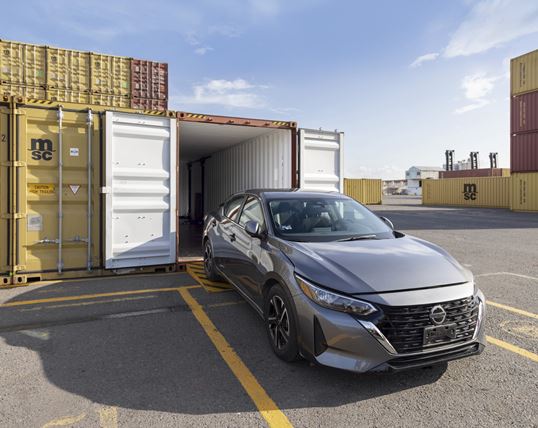
Because lithium-ion batteries are considered a fire risk, the batteries must be removed before the cargo leaves the dock. This means that EVs are usually shipped by container using racking systems and forklifts, so the cargo can be loaded and shipped without the engine needing to be switched on.
Navigating the Logistical Landscape of EV Transport
Traditionally, the most cost-effective way to transport cars overseas is using RoRo vessels, however, due to the lithium-ion batteries used in electric vehicles, a different shipping method needs to be used.
Because lithium-ion batteries are considered a fire risk, the batteries must be removed before the cargo leaves the dock. This means that EVs are usually shipped by container using racking systems and forklifts, so the cargo can be loaded and shipped without the engine needing to be switched on.
Ask MSC
Here at MSC, we provide consultation and advice on all your shipping requirements for the automotive industry, as well as a complete range of shipping and logistics services. Contact us today to find out more.
Discover our Range of Solutions

Shipping Solutions
Learn More
Warehousing & Storage Solutions
Learn More
Digital Business Solutions
Learn More
Inland Transportation & Logistics Solutions
Learn MoreRelated Articles
Shipping Vehicles to Germany: Process and Key Considerations
Germany’s thriving automotive market isn’t just about exports—it’s also a hotspot for vehicle imports, from American muscle cars to electric vehicles. Known for having one of the largest automotive markets in the world, Germany is a key trade partner for businesses operating in the automotive industry. In 2023 alone Germany was the leading exporter of passenger cars and vehicle parts, however appetite for imported vehicles remains equally strong.

Master your Supply Chain: Solving Challenges in End-to-End Logistics
From the initial stages of product design and procurement to the final delivery of goods to your consumers, end-to-end logistics describes the complete management of your supply chain. Sometimes abbreviated as ‘E2E’, end-to-end logistics management is designed to ensure that information, materials, and products flow seamlessly from one stage of the supply chain to the next, enhancing both efficiency and customer satisfaction.

Understanding and Overcoming Common Shipping Challenges
Like many, the shipping industry needs to continuously adapt and innovate to overcome different hurdles and reduce the impact these challenges can have on operations, efficiency, and profitability. All of this is alongside the work that shipping companies put in to improve operational efficiency, customer service, and sustainability practices.

Breaking Boundaries: The Endless Uses of Shipping Containers
Whether it’s as a pop-up restaurant, art studio, classroom, or commercial space, their durability and portability mean that shipping containers can be utilized creatively in everyday life. The innovative ways containers can be used may surprise you, as will the number of times you can spot second hand containers in unexpected places during the day.
FAQs
What are the Main Bottlenecks in the Electric Vehicle Supply Chain?
Some of the main causes of delays in an electric vehicle supply chain can be:
- The availability and price of battery materials (lithium, nickel, cobalt)
- Limited battery cell manufacturing capacity
- Semiconductor shortages
- Fragmented charging infrastructure and policy frameworks affecting demand and rollout
How are Electric Vehicles Shipped Internationally?
Electric vehicles can still be shipped internationally using Roll-on/Roll-off (RoRo) shipping, the same method used for conventional vehicles.
However, because Lithium-ion battery systems are classified as dangerous goods, additional safety measures are required. These include state-of-charge limits, fire risk mitigation procedures, and compliance with international transport regulations.
In some cases, containerized shipping with specialized racking is used for added security, particularly for high-value vehicles or routes where RoRo services are limited.
What Other Shipping Methods Are Used for International transport for EVs?
Alternative shipping methods include CKD (Completely Knocked Down), SKD (Semi Knocked Down), and MKD (Medium Knocked Down), where vehicles are transported in parts for local assembly.
Whichever method is used, strict compliance with dangerous goods regulations, packaging standards, and documentation requirements is essential to avoid delays and ensure safe handling.
How can I Improve EV Logistics Resilience and Cost?
There are several ways you can enhance the resilience of your electric vehicle logistics, including:
- Diversifying battery and chip suppliers to reduce reliance on one manufacturer.
- Consider nearshoring battery cells and packs as a means to help cut your lead time and reduce risk.
- Utilize intermodal transportation to enhance capacity and last-mile delivery opportunities.
- Optimize state-of-charge and temperature controls during transit to make sure your cargo arrives in optimal condition.
- Adopt digital visibility tools and slot booking.
- Enforce compliance to reduce the chance of delays across your supply chain.